Sydney Airport to the city: the station is only part of the arrival
Choose a Sydney Airport transfer around your terminal, accommodation address, luggage and complete train or road journey.

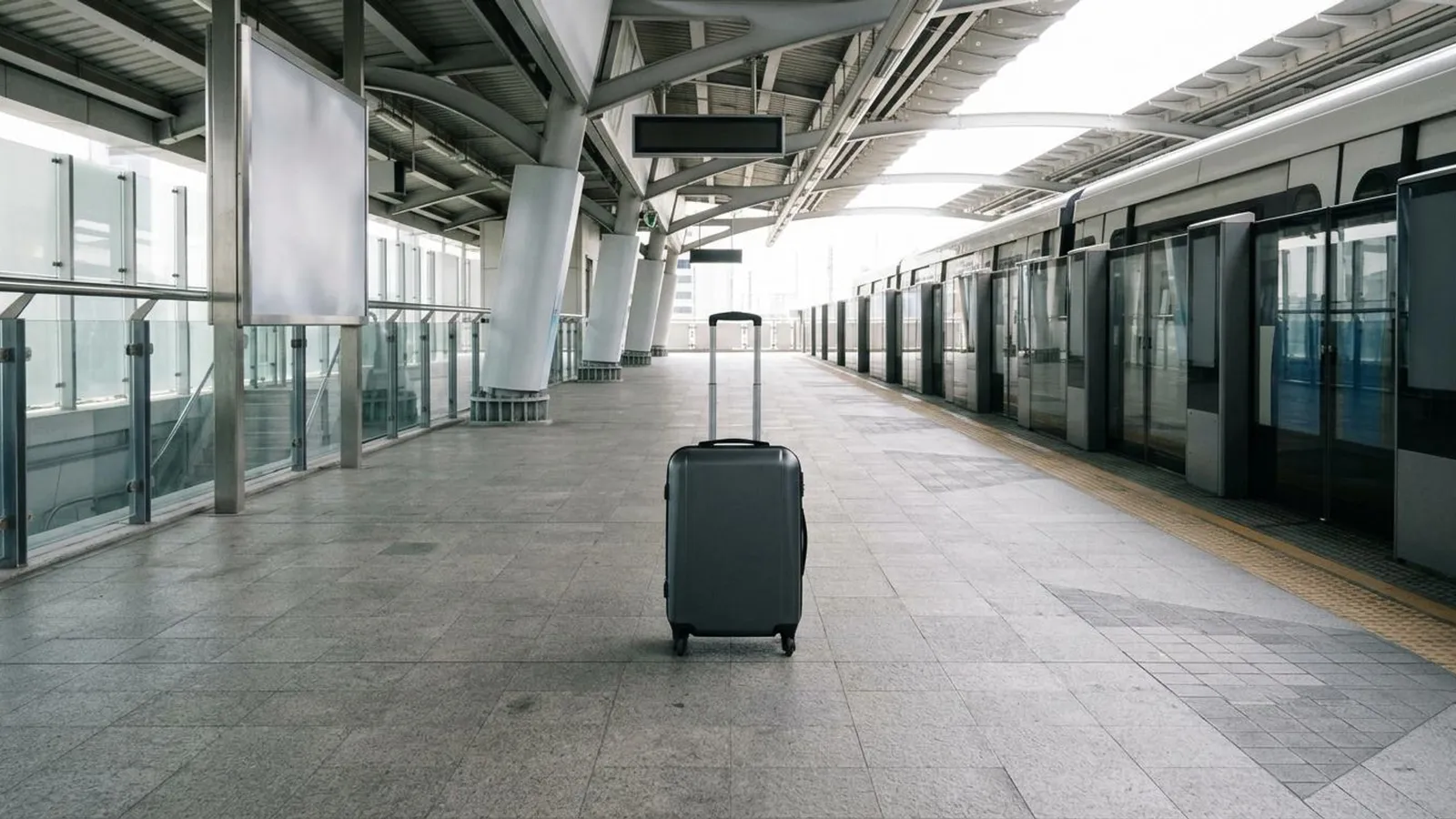
Sydney Airport has a city rail connection, but “take the train” is not yet an arrival plan. The useful comparison starts at your arrival terminal and finishes at the accommodation’s entrance, including the bags, changes and people involved.
This guide uses Sydney Airport and Transport for NSW information checked November 16, 2026. It explains the choices without quoting current fares or promising that a particular service will be running when you land. Save a current route for your own flight and address before departure.
Match the airport station to the terminal
Sydney Airport identifies T1 as its international terminal and T2 and T3 as domestic terminals. Its transport page distinguishes International Station from Domestic Station, with access from the arrivals areas (airport transport options, checked November 16, 2026).
Transport for NSW places the stations beneath the terminals. Its directions point passengers in T2 and T3 toward the lift or escalator near baggage carousel 1; for T1 it describes access from the arrivals area by Exit A (airport travel, checked November 16, 2026).
Use those directions to recognize the route, then follow current signs for your location. A domestic connection after an international flight is a different task from a city arrival. If you have another flight, settle entry formalities, baggage collection and terminal transfer with the airline rather than following the first train sign into town.
Our separate-ticket baggage guide explains why an onward flight needs more than a matching airport name.
Plan past the first city station
Transport for NSW identifies the T8 Airport & South Line as the airport train service. Enter the accommodation address into its journey planner rather than treating the first recognizable city station as your destination.
In an invented example, a couple arriving from the US has one checked bag each and an apartment booking. A train gets them into the city, but the suggested journey also involves a change and a final walk. Before choosing it, they check which station exit serves that walk and whether the apartment entrance is where the booking map suggests.
Another pair has a small bag each and accommodation beside a useful station. The same rail service can be a much simpler proposition for them. These are planning examples, not claims about the comfort or accessibility of particular stations.
Make a short route card with four items: the airport station, any interchange, the final station exit and the destination address. Save it offline. A live planner is useful, but it should not be the only place you have written the address.
Include the airport station access fee
The airport train’s price is not just the ordinary rail fare. Transport for NSW says an airport station access fee applies at Sydney Domestic and Sydney International stations, in addition to the train fare. Its planner includes that fee when applicable (fees and planning, checked November 16, 2026).
Use the complete journey result when comparing modes. A general city transport cap or a remembered train fare is not a sound substitute for checking the airport journey. This guide deliberately gives no amount: use the current official calculation for your route and payment method.
Work out payment for each traveler too. Transport for NSW lists Opal, eligible contactless payments and single tickets, with different conditions. Its contactless guidance says one card can be used per passenger. Check the appropriate arrangement for children or anyone seeking a concession rather than assuming the whole party can travel on one bank card.
A city transfer and a terminal transfer solve different problems
If you are continuing to another terminal, use the airport’s terminal-transfer instructions and the airline’s connection advice. Do not assume that a cityward rail ticket covers every airport movement on the same terms.
The official airport page links to terminal-transfer information separately from city transport. That is a useful distinction to preserve in your itinerary: “arrive in Sydney” is not the same milestone as “ready for the next flight.” Immigration, bags and check-in can sit between them.
For a city stay, you can leave connection planning behind once entry and baggage requirements are complete. Keep the relevant airline documents anyway; a delayed arrival can affect the first night’s access even if there is no onward flight.
Compare the train with a complete road journey
Sydney Airport lists taxis, rideshare, shuttles and rental cars as alternatives. It says taxi ranks are at the terminals and gives separate pickup instructions for booked services (transport options, checked November 16, 2026).
For a booked car, check the actual meeting point, party size, luggage capacity, destination and charge conditions. For a shuttle, establish whether it serves your address directly or a stop that leaves another journey. A generic “city transfer” label is not enough to establish either.
Compare those arrangements with the full rail route. A group with several bags may value a direct journey; a traveler with a small bag may prefer the train. Traffic, walking, service interruptions and the final address can change the answer. No mode is the automatic choice for every arrival.
Do not copy a price from an old airport guide into your budget. Confirm the current terms with the operator for the journey you are buying, including any applicable extras.
Check the flight time against the journey you can actually make
A scheduled landing is not the moment you reach a platform. Leave space for disembarking, entry procedures, baggage and finding your way out. Check your route’s operating information and an alternative for a late arrival instead of treating a daytime timetable as an overnight promise.
Then ask the accommodation what happens if you arrive early or late. Travel Tutor’s arrival-day planning guide keeps room access separate from transport. Its Sydney and Melbourne comparison can help if this first journey is part of a larger two-city decision.
Before flying home, repeat the route check for the departure terminal and airline’s requirements. A successful inbound trip is useful experience, not proof that the return journey has the same timing or service conditions.
Leave room for Sydney after arrival
Once the practical route is settled, explore Sydney on Bucketlist for ideas to fit your time. A low-pressure first afternoon can be more useful than committing every hour between the airport and bed.
Related guides across Accel Media: A Sydney hotel by location: the CBD, the harbor or the airport on Hotel Hacker, Could Sydney suit a longer stay? Pick a neighborhood around an ordinary week on RESTED and Sydney to Melbourne by train: the XPT, classes and booking on Railway Reviews.
Common questions
Does every terminal use the same airport station? No. Sydney Airport distinguishes International Station for T1 from Domestic Station serving T2 and T3. Follow the directions for your arrival terminal.
Does a normal train fare include all airport access charges? Transport for NSW says the airport station access fee is additional. Use its current planner and payment conditions for the complete amount.
Is a direct road transfer always simpler? It removes some rail decisions but still needs a pickup, suitable vehicle and workable destination access. Compare the complete arrangements for your party.
Sources checked November 16, 2026: Sydney Airport transport options; Transport for NSW getting to and from Sydney Airport.