Lap infant or own seat: what the FAA recommends
The FAA does not require a seat for a child under two, but it recommends an approved child restraint rather than a lap; here is what that means, what the label must say and how to decide.

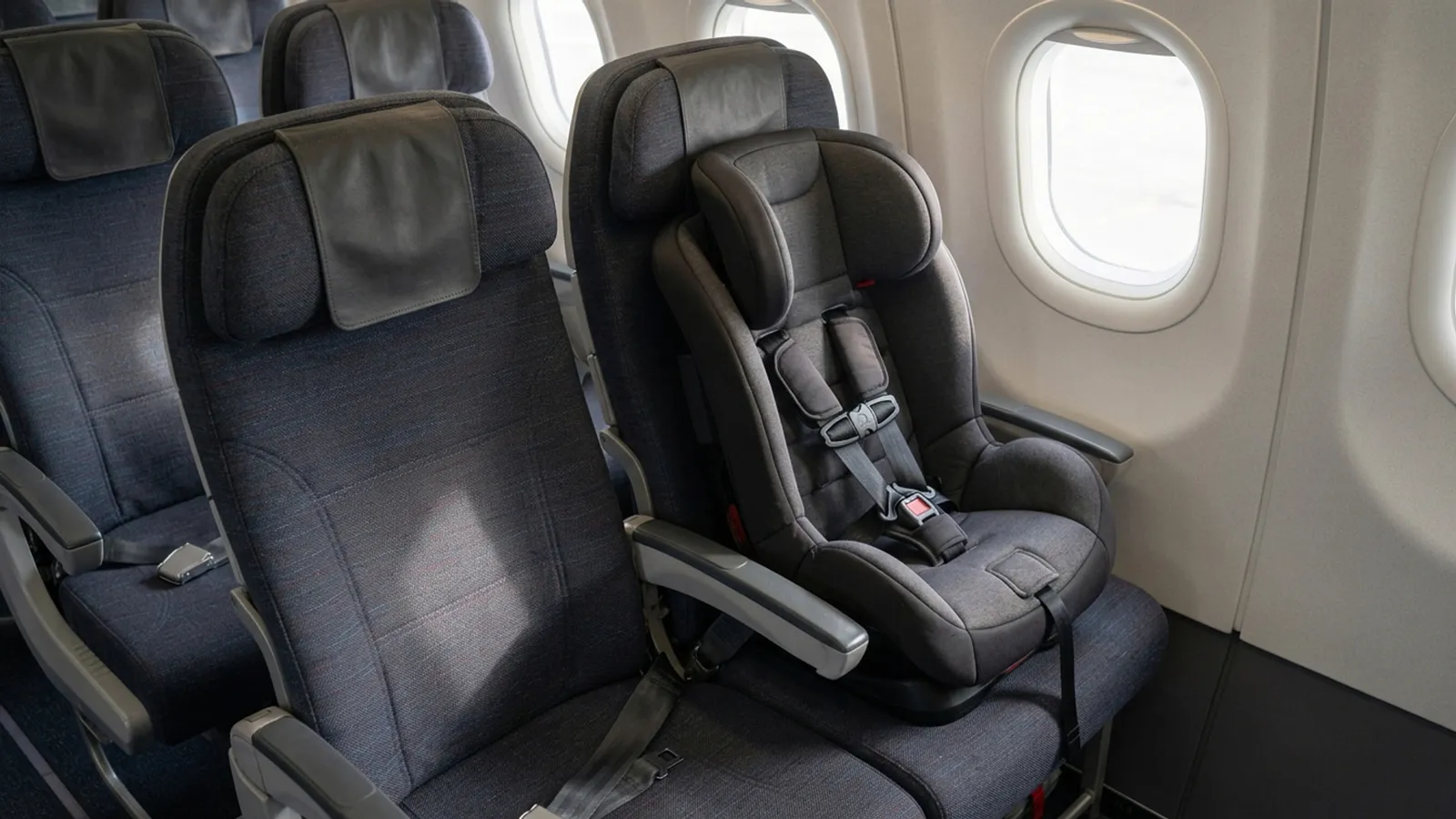
Parents of a child under two face a choice that adult travelers do not: hold the baby on your lap, or buy a seat and bring a car seat. The rules allow both. The FAA’s advice points one way, and it is worth knowing exactly what the agency says before you decide.
What the FAA recommends
The FAA says the safest place for a child under two on a U.S. airplane is in an approved child restraint system (CRS) or other approved device, not in a lap, for the entire flight (FAA Kids’ Corner, checked November 18, 2026). Its reasoning is practical. During unexpected turbulence, a parent’s arms may not be able to hold a lap child securely, and the FAA cites a 2019 National Institutes of Health study finding that unrestrained lap children are prone to in-flight injuries, particularly during meal service or turbulence.
The same page says that for children aged two and older a CRS is not required, but the FAA strongly recommends one. Separately, the FAA’s FAQ says it does not require CRS use on commercial airplanes at all, while strongly recommending a CRS or an alternative FAA-approved device chosen by the child’s weight (FAA FAQ, checked November 18, 2026).
So the accurate summary is this: a lap infant is allowed, a seat is not mandatory, and the FAA recommends a restraint anyway.
Why a ticket is part of the answer
A car seat cannot go in an airplane seat that nobody has paid for. The FAA states that buying a ticket for your child under two is the only way to guarantee the child can be secured in a CRS for that flight.
That is the real trade-off. What a lap infant costs, and what a child’s ticket costs, is set by the airline and varies by carrier and trip. This guide does not state fares or lap-infant fees. The cost of the extra seat is the price of following the FAA’s recommendation, and it is your call whether to pay it.
What counts as an approved restraint
Not every car seat works on a plane. The FAA lists these requirements (FAA: About Child Restraint Systems, checked November 18, 2026):
- A CRS must be certified for aircraft use. Look for the printed statement “This restraint is certified for use in motor vehicles and aircraft,” or, for a seat approved by a foreign government, the required label or marking.
- It must be installed according to the manufacturer’s instructions, facing the direction shown on the device label for your child’s size.
- Your child’s weight and size must not exceed the manufacturer’s limits for the device (a point the FAA makes on its Kids’ Corner page).
- The user’s manual should confirm that the seat can be secured properly in an airplane seat. Otherwise you may be asked to check it as baggage.
The FAA also prohibits passengers from using baby carriers, booster seats or backless CRS during ground movement, takeoff or landing. A booster that works in your car will not be allowed in flight.
The harness alternative for older toddlers
For a child who is old enough to sit upright alone, the FAA also certifies a harness-style option. The AmSafe CARES device is FAA-certified for children up to 40 inches tall who weigh between 22 and 44 pounds, who can sit upright alone in a forward-facing position and who occupy their own seat (FAA: CARES, checked November 18, 2026). It works with the existing aircraft seat belt and is meant for aircraft only, not for cars.
The FAA warns about counterfeit CARES devices sold online and says to buy direct from the manufacturer. It also requires one of two specific “FAA Approved” statements on the device, which the FAA page spells out. It is not an option for a baby who cannot yet sit upright alone.
If the car seat does not fit the airplane seat
The FAA says that if your approved CRS, for which you have bought a ticket, does not fit a particular seat, the airline is responsible for accommodating it in another seat in the same class of service. Airlines may have their own policies on which seat locations are safe for which aircraft, so a particular row may be off limits for a car seat.
Seat assignments matter here. If you chose a seat in advance and your flight is swapped to a different aircraft type, the seat layout can change, which is why rechecking your seat after an aircraft change is worth doing with a car seat in tow. Also note that the cheapest fare types can limit seat selection; what each fare type includes explains how.
How to decide
The FAA’s recommendation is clear, but the decision is yours, and it turns on a few questions:
- Budget. Is the cost of a second seat manageable for this trip? Check your airline’s own rules for children under two.
- Equipment. Do you have, or can you get, a seat with the aircraft-certified label? Can you carry it through the airport and install it?
- Flight length and time of day. A long or overnight flight raises the practical value of a familiar seat where the child can sleep. That is an editorial point, not an FAA statement.
- Your airline’s policy. Some practical details, such as seat location and proof of age, differ by carrier. Confirm them before you travel.
If you do fly with a lap infant, the FAA’s concerns about turbulence and meal service still apply, and it is for you and your airline to weigh them. This guide is not advice about your child’s circumstances.
Common questions
Does the FAA require a car seat for a child under two?
No. The FAA does not require a CRS on commercial flights, but strongly recommends one or another FAA-approved device.
Can I use my regular car seat on the plane?
Only if it carries the certification statement for use in motor vehicles and aircraft, or the required foreign-approval marking, and it fits the aircraft seat. Check the label and manual.
Can I use a booster seat?
Not during taxi, takeoff or landing. The FAA prohibits booster seats and backless CRS then.
Will the airline tell me where to sit?
The airline may have rules about safe seat locations for car seats on specific aircraft. Ask when you book.
Sources checked November 18, 2026: FAA Kids’ Corner: Child Safety in Flight, About Child Restraint Systems, FAA-Approved CARES Device and FAA FAQ on flying with children. Airline lap-infant fares, age rules and seating policies are set by each carrier; check your airline’s own page before you book.
This guide is general information, not advice about any particular child or booking.